
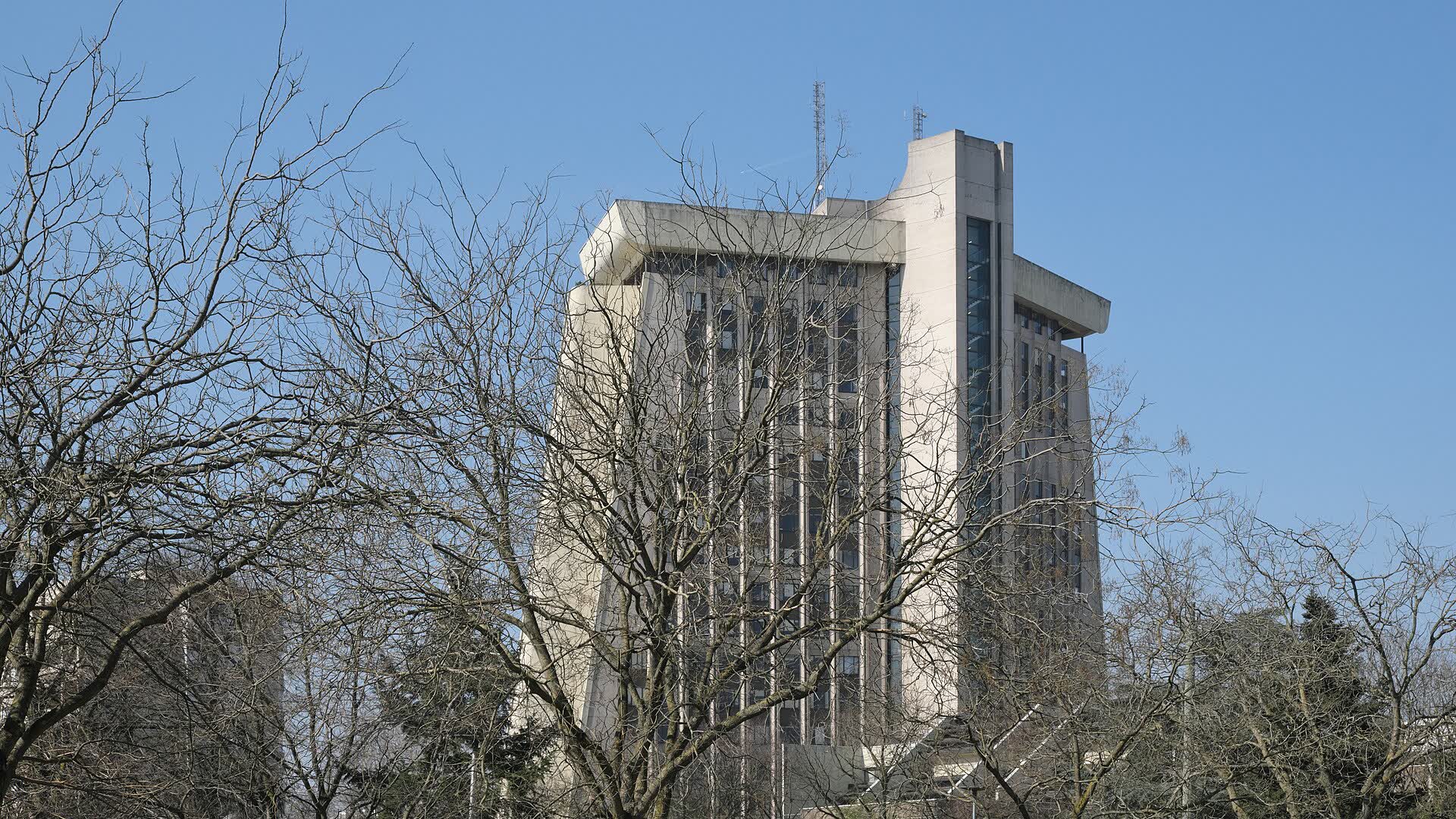
Which court deals with offences at Paris-Orly?
Paris-Orly airport straddles two départements: Val-de-Marne (94), on the territory of Orly, Rungis, Thiais and Villeneuve-le-Roi, and Essonne (91), on the territory of Athis-Mons, Chilly-Mazarin, Morangis, Paray-Vieille-Poste and Wissous.
For the courts, however, the airport site is treated as a single area. The table of courts annexed to the Code of Judicial Organisation (annex table IV) attaches the whole airport site (emprise de l'aérodrome de Paris-Orly) to the Créteil judicial court (tribunal judiciaire de Créteil), within the area of its local chamber (chambre de proximité) at Ivry-sur-Seine, and expressly excludes it from the Longjumeau chamber of the Évry-Courcouronnes court, which covers the neighbouring Essonne towns. As a rule, an offence committed on the airport site therefore falls within the area of the Créteil public prosecutor (parquet de Créteil), competent as prosecutor for the place of the offence (art. 43 of the Code of Criminal Procedure), and of the Créteil criminal court (tribunal correctionnel), competent as the court for the place of the offence (art. 382). The law also gives jurisdiction to the prosecutor and the court of the place where a suspect lives or was arrested (arts. 43 and 382), so another court may deal with some cases.
The court sits at Place du Palais, 94000 Créteil (switchboard: +33 1 49 81 16 00). It comes under the Paris Court of Appeal (cour d'appel de Paris), to which appeals against its criminal judgments are brought (art. 496 of the Code of Criminal Procedure).
Someone held in custody? Call now, day or night
+33 1 87 66 00 48Who makes arrests at the airport: border police and customs
Two services operate at Paris-Orly: the border police (police aux frontières), through its directorate for the Paris airports (Paris-Charles de Gaulle, Le Bourget and Paris-Orly), and customs (douane), which has a regional directorate at Orly. The legal framework depends on which service holds the person.
- Police custody (garde à vue): only a judicial police officer (officier de police judiciaire) can order it. It lasts 24 hours, once extendable by 24 hours on the prosecutor's written and reasoned authorisation, for a crime or an offence punishable by at least one year of imprisonment (art. 63 of the Code of Criminal Procedure). Longer periods are possible only for specific serious offences listed by law, such as drug trafficking (arts. 706-73 and 706-88).
- Customs detention (retenue douanière): customs officers may detain a person only for certain flagrant offences under the Customs Code punishable by imprisonment, and only where the needs of the customs investigation justify it (art. L. 432-1 of the Customs Code). It cannot exceed 24 hours, once extendable by 24 hours on the prosecutor's written and reasoned authorisation (art. L. 432-2). The prosecutor for the area where the offence was found is informed from the outset (art. L. 432-3): for the airport site, this is the Créteil prosecutor.
- End of customs detention: the prosecutor orders that the person be brought before him or her, before a judicial police officer or before an authorised customs officer, or released. If police custody follows, the time already spent in customs detention is deducted from it (art. L. 432-11).
Since 1 May 2026, these customs rules have been set out in articles L. 432-1 and following of the recodified Customs Code, which replaced former article 323-1.
Rights of a foreign national held at Orly
Whether in police custody or in customs detention, the person must be told of their rights immediately, in a language they understand (art. 63-1 of the Code of Criminal Procedure; art. L. 432-7 of the Customs Code). The main rights are:
- an interpreter: a person who does not understand French is entitled to an interpreter until the end of the proceedings, including for discussions with their lawyer directly linked to questioning or a hearing, and to the translation of the documents essential to their defence (preliminary article of the Code of Criminal Procedure);
- the consular authorities: a foreign national may have the consular authorities of their country contacted (art. 63-2; art. L. 432-5 of the Customs Code), and may also have a relative and their employer informed;
- a lawyer: as a rule from the start of the measure, with a confidential interview of up to 30 minutes and, on request, the lawyer's presence during questioning (arts. 63-3-1 to 63-4-2);
- a doctor, and the right to remain silent once they have given their identity (arts. 63-1 and 63-3).
A relative who has been informed of the custody at the person's request can appoint a lawyer for them; the person held must then confirm that appointment (art. 63-3-1).
A hearing is coming up? The firm answers 24/7
+33 1 87 66 00 48After custody: the Créteil court and the firm's role
At the end of police custody, on the prosecutor's instructions, the person is either released or brought before the prosecutor (déferrement) (art. 63-8 of the Code of Criminal Procedure). Where the maximum sentence is at least two years' imprisonment, or at least six months for a flagrant offence, the prosecutor may bring the person before the Créteil criminal court the same day under the immediate appearance (comparution immédiate) procedure (art. 395).
The defendant can only be tried that day with their consent, given in the presence of a lawyer (art. 397). If they refuse, or if the case is not ready, the hearing is adjourned to a date between four and ten weeks later, unless the defendant expressly waives the minimum period (art. 397-1). If the court cannot sit the same day, the prosecutor may bring the person before the liberty and custody judge (juge des libertés et de la détention), who rules on detention; the defendant must then appear before the court no later than the third working day (art. 396).
Maître Charles Bruguière practises at 9 rue Léon Vaudoyer, 75007 Paris and intervenes throughout the Île-de-France region, before the Créteil court and alongside a person held by the border police or customs at Paris-Orly. Consultations and the defence can be conducted in French or in English. The firm can be reached 24 hours a day, 7 days a week, on +33 1 87 66 00 48, including by a relative calling from abroad. Each case is prepared individually, in accordance with the professional rules of the Bar.
Criminal emergency 24/7
Police custody or a court hearing in Paris? The firm intervenes without delay.